
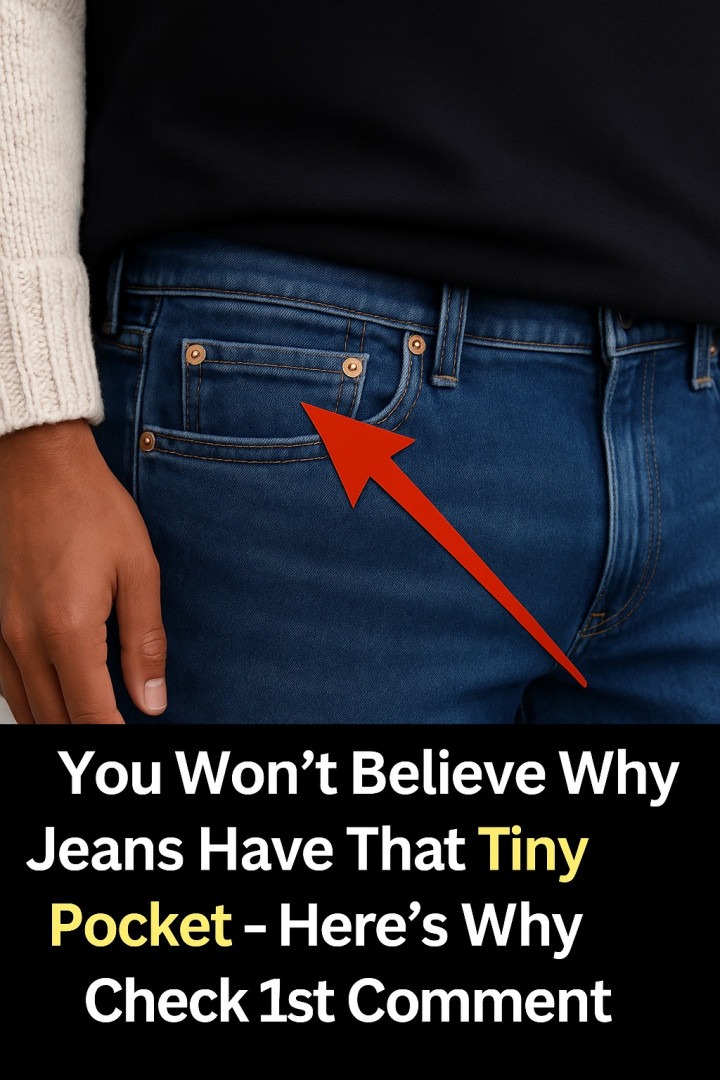
You Won’t Believe Why Jeans Have That Tiny Pocket
Jeans are one of the most iconic pieces of clothing in the world. They’re versatile, durable, and timeless. But if you’ve ever noticed, there’s always a tiny pocket tucked inside the larger front pocket—so small that most people wonder what it’s even for. The truth behind this little detail might surprise you.
The Origin of the Tiny Pocket
The tiny pocket, often called a watch pocket or coin pocket, dates back to the 19th century. Levi Strauss, the founder of Levi’s jeans, created it in the late 1800s. Back then, cowboys and workers needed a safe place to store their pocket watches, which were valuable and easily damaged.
These small metal watches were essential for keeping time during work or travel, but they could easily get scratched or fall out of a larger pocket. The tiny pocket solved that problem perfectly.
How It Was Used Over the Years
After its original purpose, the tiny pocket evolved. Some people used it for coins, others for keys, matches, or even small tools. In modern times, it’s become more of a fashion detail than a functional necessity, but it still adds to the authenticity of classic jeans designs.
Interestingly, some denim brands even use it to store tiny gadgets, like USB drives or guitar picks. Despite its small size, this little pocket has remained a staple in jeans design for over a century.
Why It Still Exists Today
You might wonder, in an era of smartphones and digital watches, why does the tiny pocket still exist? The answer is simple: tradition and style. Jeans are not just clothing—they’re a symbol of heritage. Designers keep the tiny pocket as a nod to history, giving jeans that classic, rugged look.
Some fashion experts also believe it adds practical versatility, even if it’s just to hold a small item safely. And for some, it’s a fun conversation starter: “Do you know why this pocket is here?”
