
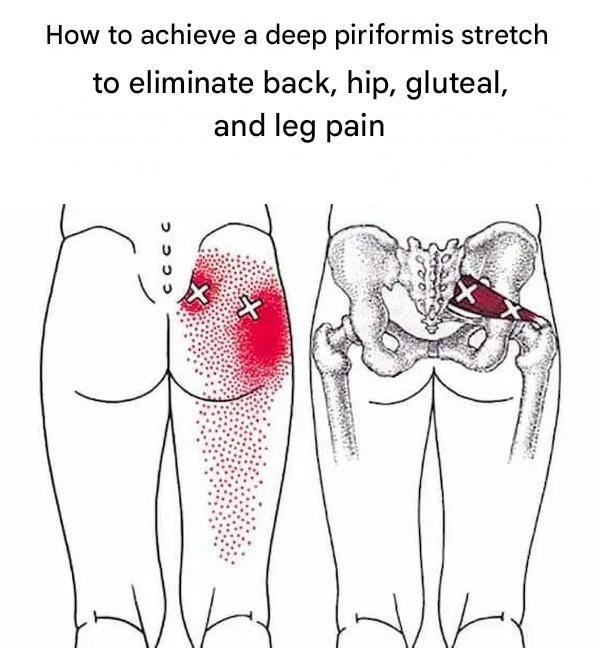
Lower back pain is extremely common and can have many different causes. One cause that is often overlooked—but occurs more frequently than many people realize—is a tight or irritated piriformis muscle.
The piriformis is a small, thin muscle located deep in the buttocks, behind the gluteus maximus. It connects the lower spine to the top of the femur (thigh bone). When this muscle becomes tight, inflamed, or spasmed, it can interfere with normal movement and place pressure on nearby nerves. Performing effective piriformis stretches can help restore muscle function and significantly reduce pain.
What Is the Piriformis?
The piriformis muscle plays a key role in hip movement and stability. It helps rotate the hip outward and supports balance during walking, running, and other daily activities. Because of its location near the sciatic nerve, problems with this muscle can sometimes mimic or cause sciatica-like symptoms.
Causes of Piriformis Syndrome
Piriformis syndrome occurs when the piriformis muscle compresses or irritates the sciatic nerve. This can lead to symptoms such as:
- Deep buttock pain
- Lower back discomfort
- Tingling or numbness down the leg
- Radiating pain into the hip, thigh, or calf
Common causes include prolonged sitting, overuse from physical activity, muscle imbalances, poor posture, or injury.
