
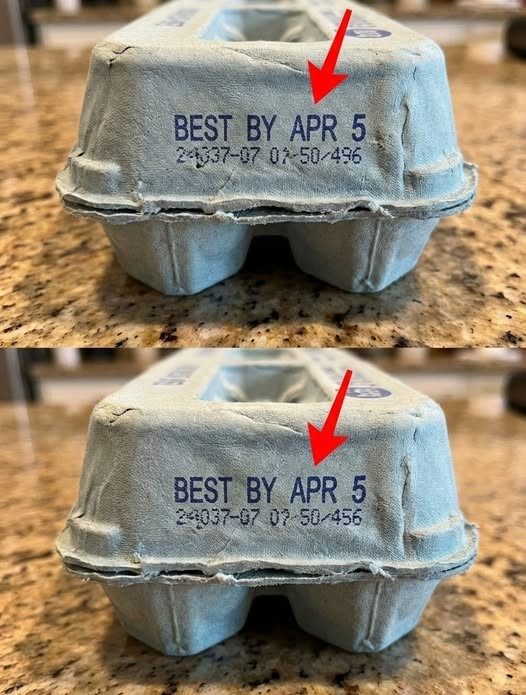
✅ How to Use the Julian Date Safely
- Find the three-digit number on the short side of the carton (often near the USDA grade mark).
- Convert it to a calendar date (a Julian date converter helps).
- Use eggs within 3–5 weeks of that pack date.
- When in doubt, throw it out—especially for dishes like quiche, hollandaise, custard, or tiramisu.
🥚 Bonus: Other Egg Carton Codes Decoded
| Marking | What It Means |
|---|---|
| Grade AA, A, B | Egg quality (AA = firm whites, round yolks) |
| Organic | Organic feed, no antibiotics, outdoor access |
| Cage-Free | Not kept in cages (may still be indoors) |
| Pasture-Raised | Outdoor access with roaming space |
| Plant Code (e.g., P-1234) | Identifies the farm for recalls |
🛡️ Tips to Prevent Egg-Related Illness
- Never eat raw or undercooked eggs (unless pasteurized)
- Cook egg dishes to 160°F (use a thermometer for quiche and custards)
- Don’t leave eggs out longer than 2 hours (1 hour if over 90°F)
- Wash hands and surfaces after handling raw eggs
- Buy eggs with clean, uncracked shells
The Bottom Line
The Bottom Line
That little number on your egg carton isn’t just packaging filler—it’s a freshness timestamp that could save you from a miserable dinner-party aftermath.
Next time you grab a carton, check the Julian date. It takes two seconds—and might be the difference between happy guests and an uncomfortable night.
“Freshness isn’t just about taste—it’s about safety.”
Did you know about the Julian date before this? Ever had an egg-related food scare? Share your story below—we’re all learning to cook safer together. 🥚🔍✨