
Signs that it’s time to wash your hair
Rather than counting the days on a calendar, it’s better to observe your scalp and the lengths of your hair.
Here are the signals to watch for:
- Persistent itching at the roots.
- The feeling of heavy or flat hair.
- Unusual odor near the scalp.
- Oily appearance upon waking.
- Visible accumulation of styling product residue.
If you notice one or more of these signs, it’s probably a good time to shampoo, even if it’s only been a day.
Conversely, if your scalp is comfortable and your hair lengths are light, there’s no need to force it.
Hair type changes everything
You don’t wash curly hair the same way you wash fine, straight hair: that’s where many people go wrong.
In general :
- Oily hair: may require more frequent washing to avoid excess sebum.
- Dry or curly hair: tolerates longer intervals better, because sebum is less easily distributed on the fiber.
- Regular exercise: perspiration may justify more frequent cleaning, especially at the roots.
- Hot and humid climate: promotes the feeling of an oily scalp.
- Colored or sensitized hair : requires more gentleness and suitable moisturizing care.
Comparing your routine to a friend’s is therefore rarely relevant. Every scalp has its own needs.
Washing your hair properly: the steps that make all the difference
Frequency is important, but the method is just as important.
A few simple rules:
- Use lukewarm water, not boiling, to avoid drying out the scalp.
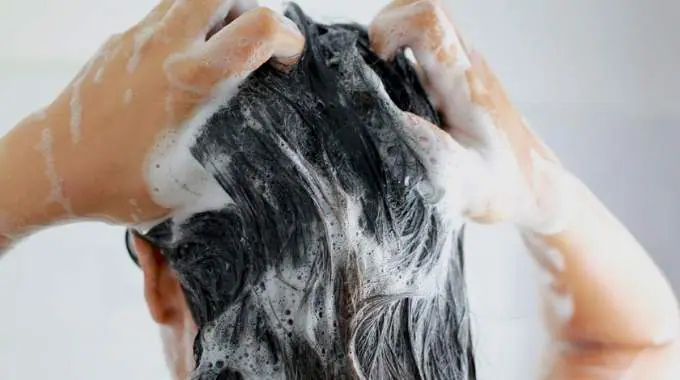
- Massage gently with the pads of your fingers, without scratching with your nails.
- Apply conditioner only to the lengths and ends, never to the roots.
- If you wash your hair often, add a nourishing mask once a week as a supplement.
For best results, start by thoroughly wetting your hair, apply a small amount of shampoo to your scalp, massage, then rinse thoroughly before applying conditioner to the lengths of your hair. Insufficient rinsing can leave residue and weigh down your hair.
A clean scalp is essential for the comfort and beauty of your hair. Washing your hair too infrequently can lead to a buildup of sebum, perspiration, and styling products, which weighs down your hair.
Misconceptions to forget immediately
Some beliefs die hard.
No, washing your hair frequently does not directly cause it to fall out. The hair you see falling out in the shower is usually at the end of its natural growth cycle.
No, the scalp does not “get used to” shampoo by producing more and more sebum.
No, the less you wash, the healthier your hair will necessarily be.
As is often the case in beauty, excess is the problem: washing too much can weaken the skin, but spacing out shampoos too much can create discomfort.
The best frequency? The one that respects your scalp, your lifestyle… and allows you to adopt a suitable hair care routine in which you feel good.
