
1. The Mystery Of The Mud Tower In Your Lawn
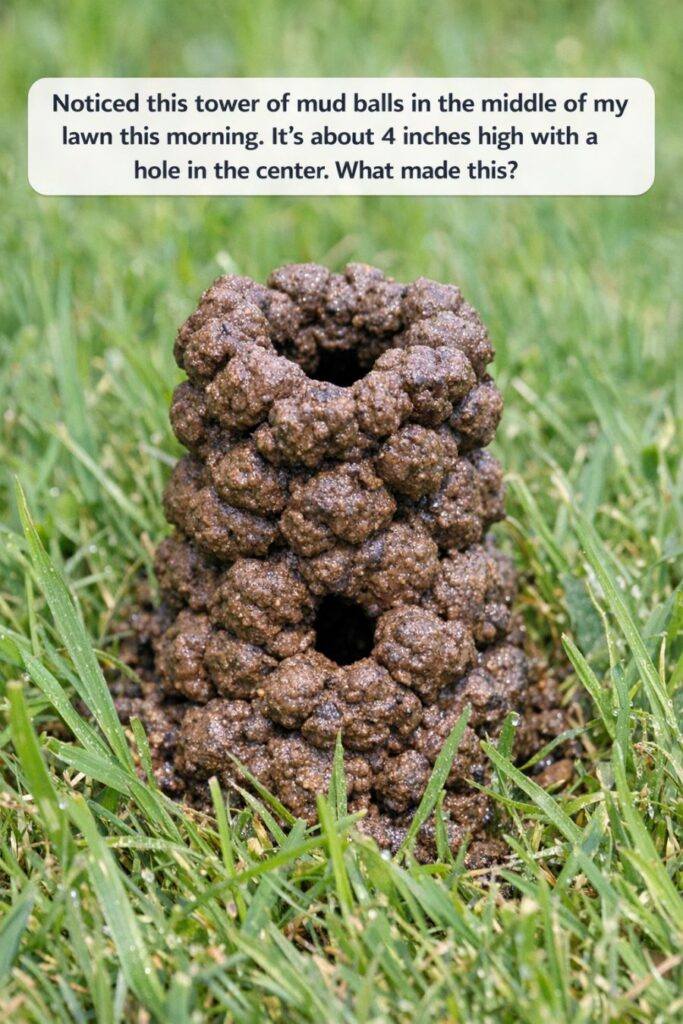
The appearance of these mud towers in your lawn can be quite perplexing, especially if you’re unfamiliar with their origin. These structures are cylindrical and formed by small balls of mud stacked upon one another, reaching heights of about 3 to 6 inches. The central hole, often half an inch wide, adds to their enigmatic appearance. Such formations are not random; they are the result of specific animal behavior, often seen in well-watered lawns or near bodies of water.
While the immediate assumption might be that these are the creations of insects or small mammals, understanding the exact builders requires a closer look at the environmental conditions and the construction style of these mud towers.
2. Meet The Builders: Terrestrial (Burrowing) Crayfish
The architects behind these peculiar mud towers are usually terrestrial crayfish, also known as burrowing crayfish. Unlike their aquatic relatives, these crayfish have adapted to life on land and are often found in areas with moist soil conditions. They are nocturnal creatures, which means they do most of their work under the cover of darkness, contributing to the surprise when these towers appear seemingly out of nowhere.
Burrowing crayfish are fascinating creatures that can measure between 3 to 6 inches in length. They dig elaborate burrows into the ground, sometimes reaching depths of several feet, to create a habitat that remains humid and safe from predators. The mud chimneys serve as ventilation shafts for these burrows, allowing the crayfish to breathe while underground.
3. How Crayfish Engineer Those Miniature Mud Chimneys
These crayfish are expert engineers, using their claws to excavate the soil and form the tower by stacking mud balls. As they dig, they carry mud to the surface and deposit it around the entrance of their burrow, forming a chimney-like structure. This process is not random; it is a carefully constructed feature that helps maintain the right environment within their subterranean home.
The construction of these chimneys is crucial for regulating airflow and humidity inside the burrow. By creating this vertical structure, the crayfish ensures that the burrow remains well-ventilated, which is essential for their survival in terrestrial habitats.
